
Is stupidity unconstitutional? Over the past several weeks, lawmakers have found themselves asking this question after President Trump has become more and more unhinged, irritable, and dangerous.
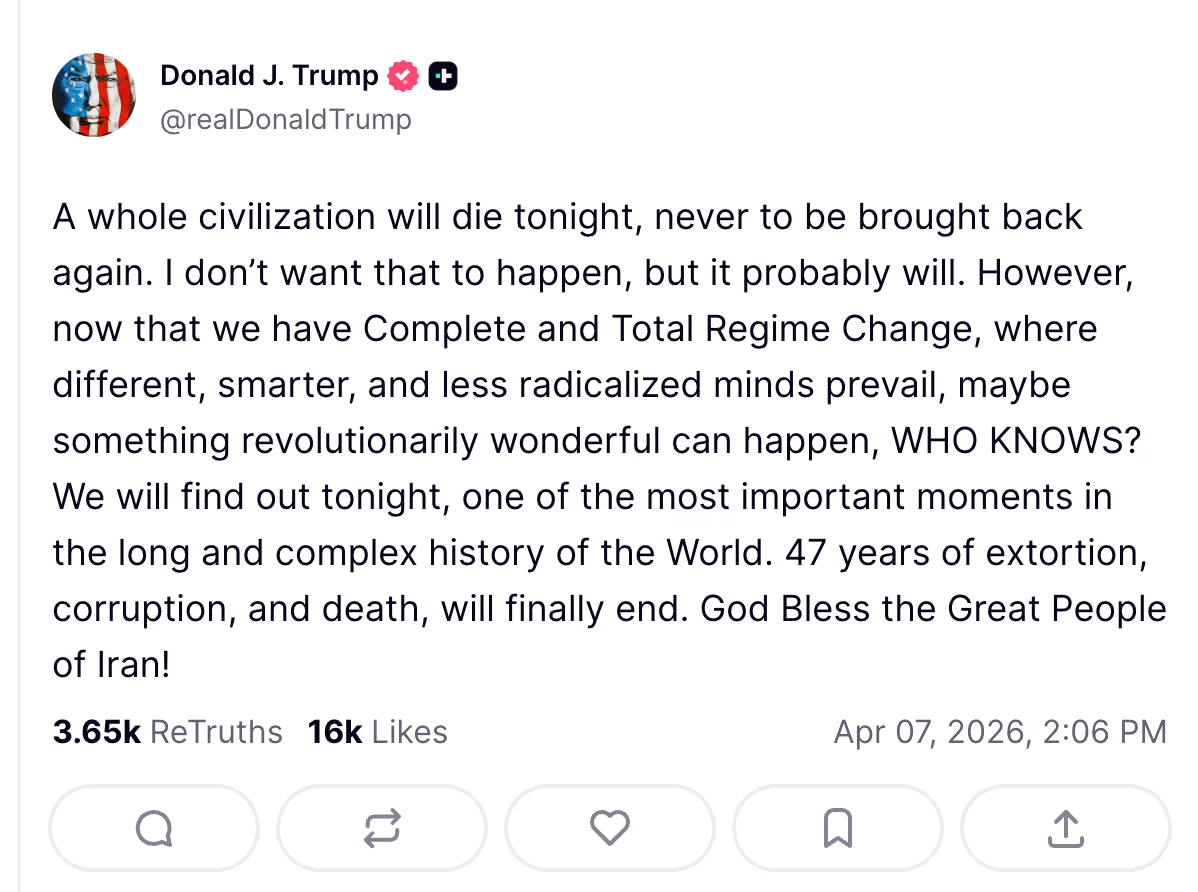
On Tuesday, April 7, 2026, Donald Trump made a post on Truth Social threatening that “a whole civilization will die tonight, never to be brought back.” This threat came on the heels of Iran seemingly ignoring a deadline that Trump had set for a deal to be reached in the ongoing war. Although later that same day, Trump announced a ceasefire with Iran, contingent on the reopening of the Strait of Hormuz. This behavior sparked condemnation from both Democratic lawmakers and global organizations. Many lawmakers even began to call for the expulsion of Trump from the White House, either through impeachment proceedings or through the use of the 25th Amendment.
However, this situation sparks the question: Is stupidity unconstitutional? Can a president be removed for making threats, or must they act on them before Congress or their cabinet can step in? What Donald Trump threatened would be a clear violation of the Geneva Convention, as he warns of collective punishment and the destruction of civilian infrastructure. However, when do these threats merit action against the President?
The problem with the Constitution is that the two paths it offers to remove a president are so incredibly difficult to accomplish that, in America’s almost 250-year history, no president has been removed under them. The 25th Amendment provides a pathway for the Vice President and the heads of executive departments to remove a president if they are “unable to discharge the powers and duties of [their] office.” They must take a majority vote proclaiming that the President is incapable of fulfilling his duties, and then send a message to the leaders of the Senate and House of Representatives. The Vice President would then assume presidential power.
If the President challenges this claim of incapacitation, then both houses of Congress must pass a resolution with two-thirds support claiming that the president is unable to carry out his duties. If the resolution does not reach this threshold, then the President resumes office. This process seems impossible to complete, especially today in our current political climate. To get both houses of Congress to pass any resolution with ⅔ support is difficult, but even more so when it pertains to who is running the country.
Many lawmakers will shout and point to this path as if it is a viable option, but its inclusion in the Constitution is more for show than for actual use. Even in the aftermath of January 6th, when it seemed clear that Trump had both violated the Constitution and attempted to destroy American democracy, Mike Pence refused to invoke this amendment.
Then there is the process of impeachment, which sees the House of Representatives bring articles of impeachment against the President, which can pass with a simple majority. Then a trial is held in the Senate. After this trial, it takes two-thirds of the present Senate members to vote to convict in order for the President to be removed. Again, we see this supermajority of legislators needed for any real action to be done hamstringing the process of removing a President. Although frustrating, the fact that it is incredibly hard to remove the President is not necessarily a flaw of the Constitution; it is an intentional feature. Removing the President would mean undermining the voices of millions of Americans who voted in the free and fair election that saw the President take office. If any political figure could be removed by a simple majority in Congress, then the Oval Office would see a rotating cast of characters walk through its doors at the same rate as control of Congress shifted. It is scary to watch such a dangerous and unhinged man hold office today; however, it might be just as scary to see rogue partisanship be able to kick duly elected officials out of office.
Therefore, the answer to the question I posed before is simple. Is stupidity constitutional? Absolutely, 100%, yes! The President gets to stay in the Oval Office no matter how dangerous, inflammatory, or horrible their policy and statements are! It is a terrible conclusion, but it might be just as terrible to watch Congress kick out every elected official with the ease of a majority vote. These threats of removing the President are more of a political statement than anything, and all of these politicians are aware of that. By invoking the names of these procedures, they are trying to send a message that they are vehemently opposed to the President’s actions, not that they actually believe he will be removed from office.
The American system is built with a much more practical way of checking the President’s power: midterm elections. Although they cannot remove the President from office, they are able to choke off the source of his power by removing Congress from his hands. This, in essence, removes much of the President’s power, but is still done so in accordance with what the American people want. It is frustrating to see such incompetent and immoral behavior coming from the supposed leader of the free world; however, since the American people invited these ideals into the office, they are here to stay… at least for now.
